The Best Mini German Pancakes Recipe (Perfectly Puffy Every Time!)
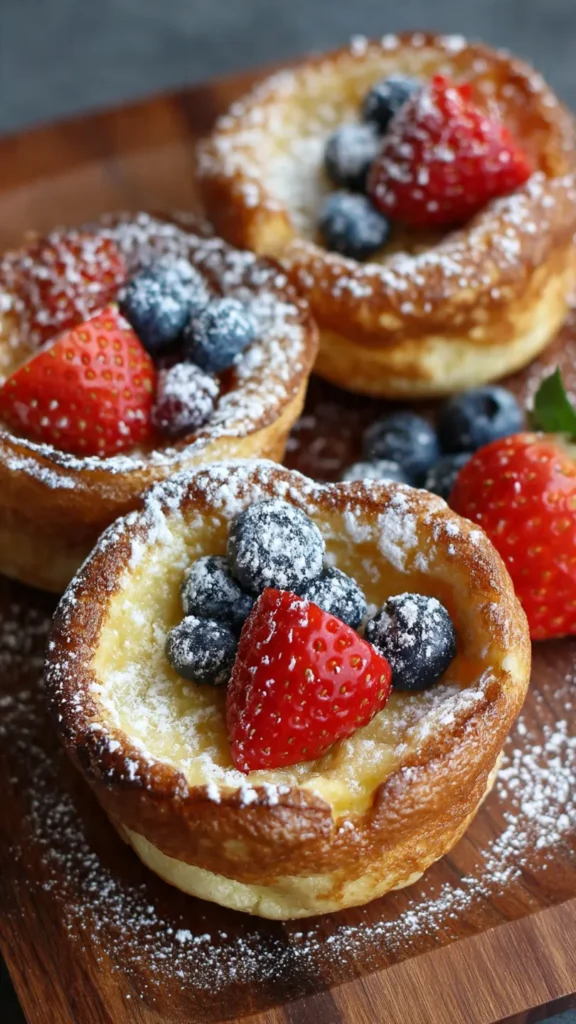
The first time I watched mini German pancakes puff up in my oven like little golden soufflés, I felt like I’d discovered breakfast magic. There’s something absolutely enchanting about opening the oven door to find two dozen perfectly puffy, cloud-like pancakes with crispy edges and custard-soft centers—all cooked at once with zero stovetop flipping required.
I created this mini version after years of fighting over the coveted crispy corners of a traditional German pancake baked in a large pan. With mini German pancakes, everyone gets their own perfectly portioned serving with crispy edges all around, and I get to enjoy breakfast with my family instead of standing at the stove flipping batch after batch. These became our weekend tradition and our secret weapon for stress-free brunch hosting.
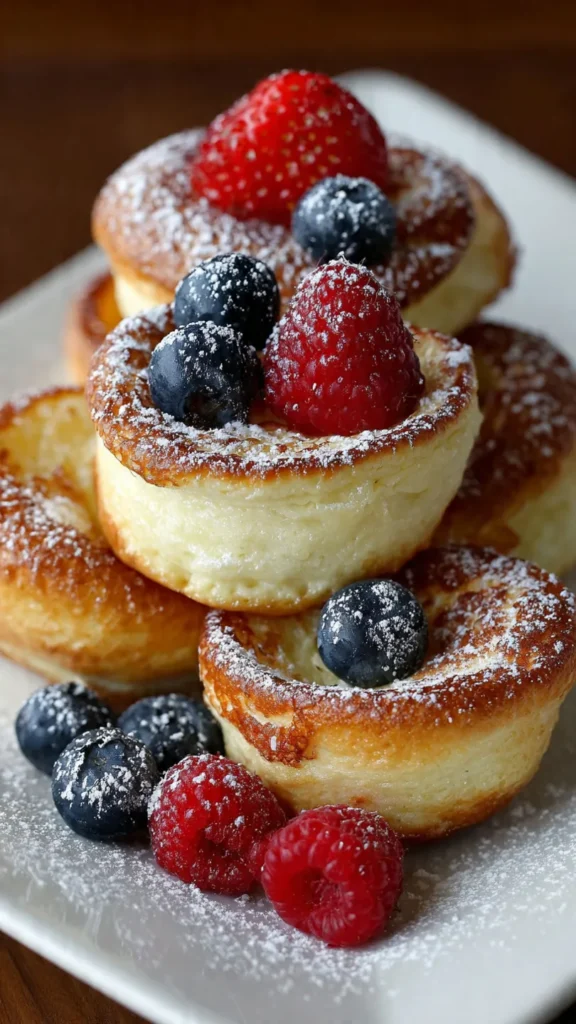
What makes this recipe exceptional is its foolproof simplicity—just blend six basic ingredients, pour into a hot muffin tin, and bake for 12 minutes. You’ll get beautifully puffed, golden pancakes that taste like a cross between a popover, a crêpe, and a soufflé, with endless topping possibilities from maple syrup to fresh berries to powdered sugar.
Table of Contents
Prep Time: 5 min | Cook Time: 10-12 min | Total: 17 min
Yield: 24 mini pancakes (4-6 servings) | Difficulty: Easy
Quick Stats Box:
- Cuisine: German/American
- Course: Breakfast/Brunch
- Diet: Vegetarian, can be made gluten-free
- Best for: Weekend breakfasts, brunch parties, meal prep
Why This Recipe Works
- Everyone gets the crispy edges — Mini portions mean every pancake has delicious golden-brown crispy edges all around, no fighting over corners
- All done at once — Bake 24 pancakes simultaneously in the oven, no stovetop flipping or keeping batches warm
- Dramatic puff factor — The high oven heat creates steam that makes these pancakes rise spectacularly high before settling into perfect cups
- Five-ingredient simplicity — Just eggs, flour, milk, salt, and butter—ingredients you already have in your kitchen
- Versatile topping options — Serve sweet with syrup and fruit or savory with cheese and herbs
Ingredient Spotlight
Eggs: These are the star of German pancakes, providing the structure and lift that creates that signature puff. With six eggs in the batter, these pancakes have a rich, custardy texture similar to Yorkshire pudding or popovers. The high egg content is what makes them rise so dramatically in the hot oven.
Whole Milk: Full-fat milk creates the most tender, creamy texture. The fat content helps create a silky batter that bakes into soft, custardy centers. While you can use lower-fat milk, whole milk produces the richest, most authentic German pancake texture.
Hot Butter in the Pan: Melting butter in the muffin tin while the oven preheats is crucial. The sizzling hot butter creates an immediate sear on the batter, which helps the pancakes release easily and adds incredible flavor and golden-brown color to the edges.
Ingredients
For the Pancake Batter:
- 6 large eggs, room temperature
- 1 cup (240ml) whole milk
- 1 cup (125g) all-purpose flour
- ½ teaspoon vanilla extract
- ¼ teaspoon salt (or ½ teaspoon if using unsalted butter)
- Optional: ½ teaspoon ground cinnamon
- Optional: 1 tablespoon granulated sugar (for sweeter pancakes)
For the Muffin Tins:
- 4-5 tablespoons butter (about ½ stick), cut into small pieces
- OR cooking spray (less traditional but works)
For Topping (Choose Your Favorites):
- Powdered sugar for dusting
- Pure maple syrup
- Fresh berries (strawberries, blueberries, raspberries)
- Lemon wedges
- Fruit preserves or jam
- Whipped cream
- Cinnamon sugar
Ingredient Notes:
- Quality matters most: Room temperature eggs blend more smoothly and create a more uniform batter
- Flour measurement: Spoon flour into your measuring cup and level off—don’t pack it—for the lightest texture
- Don’t skip: The butter in each muffin cup is essential for flavor and preventing sticking—don’t substitute with oil
Essential Equipment
You’ll Need:
- Two 12-cup standard muffin tins (for 24 mini pancakes)
- Blender or mixing bowl with whisk
- Measuring cups and spoons
- Small knife for cutting butter
- ¼ cup measuring cup or ladle for portioning batter
Nice to Have:
- Spoon or small offset spatula — for easily removing pancakes from tin
How to Make Mini German Pancakes (Step-by-Step)
Step 1: Preheat Oven and Prepare Muffin Tins
Preheat your oven to 400°F. While the oven is heating, cut your butter into small pieces—about ½ to ¾ teaspoon per muffin cup. Place one small piece of butter into each cup of your muffin tins. Once the oven reaches temperature, place the muffin tins with butter in the oven and let the butter melt completely, about 2-3 minutes. Watch carefully to ensure butter doesn’t burn—a little browning is fine and adds flavor, but don’t let it turn dark brown.
Pro tip: Getting the butter hot and sizzling before adding batter is the secret to that crispy, golden exterior and easy release.
Step 2: Blend the Batter
While the butter is melting, add eggs, milk, and vanilla extract to a blender. Blend on low speed for 10-20 seconds until smooth and combined. Add flour and salt (and cinnamon if using). Blend on low speed just until the flour is incorporated and no lumps remain, about 15-20 seconds. Don’t over-blend—you want a smooth batter but not one that’s been whipped to incorporate too much air.
Alternative method: If you don’t have a blender, whisk eggs in a bowl, add milk and vanilla, then gradually whisk in flour and salt until smooth.
Step 3: Pour Batter into Hot Muffin Tins
Carefully remove the hot muffin tins from the oven—the butter should be fully melted and sizzling. Working quickly but carefully, pour batter into each muffin cup, filling them about halfway to two-thirds full. Use a ¼ cup measure or small ladle to portion evenly—you should get exactly 24 mini pancakes. The batter will sizzle when it hits the hot butter—that’s perfect.
Common mistake: Overfilling the cups causes overflow and uneven rising. Half to two-thirds full is ideal.
Step 4: Bake Until Puffy and Golden
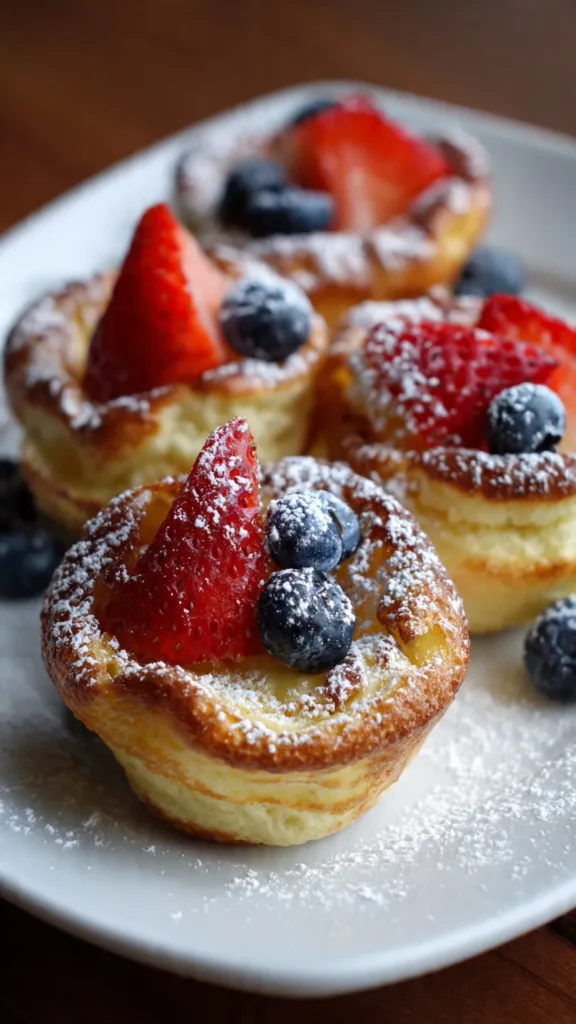
Immediately return the muffin tins to the oven. Bake for 10-12 minutes without opening the oven door. You’ll know they’re done when the pancakes have puffed dramatically, risen well above the muffin tin edges, and turned golden brown around the edges and on top. The centers should look set, not jiggly. They’ll be hugely puffy when you first open the oven door.
Pro tip: Resist the urge to open the oven door during baking—the temperature drop can cause them to deflate prematurely.
Step 5: Remove and Serve Immediately
Remove muffin tins from the oven. The pancakes will immediately begin to deflate—this is completely normal and expected. Use a spoon or small offset spatula to gently scoop each mini pancake out of the tin while still warm. They should release easily. Place them on a serving platter or individual plates.
Step 6: Add Toppings
Serve immediately while warm, dusted with powdered sugar, drizzled with maple syrup, or topped with fresh fruit. The slightly deflated centers create perfect little cups for holding toppings.
Expert Tips & Tricks
Temperature Matters: The butter and muffin tin must be sizzling hot when you add the batter—this creates the immediate sear that helps the pancakes rise and develop crispy edges.
Don’t Open the Oven: Resist checking on them during baking. Opening the oven door releases heat and steam, which can cause premature deflation.
The Secret to Maximum Puff: Room temperature eggs and milk blend more smoothly and rise better than cold ingredients. Let them sit out for 20-30 minutes before making the batter.
Common Mistake: Over-blending the batter creates too much gluten development, resulting in tough, chewy pancakes instead of tender, custardy ones. Blend just until smooth.
Test Kitchen Discovery: These pancakes always deflate after leaving the oven—it’s physics, not failure ! The deflated centers actually create perfect little cups for holding syrup and toppings.
Customization Ideas
Dietary Modifications:
- Gluten-Free: Substitute all-purpose flour with ½ cup brown rice flour + ¼ cup tapioca starch
- Dairy-Free: Use almond milk or oat milk in place of cow’s milk, and coconut oil in place of butter
- Lower Cholesterol: Use 3 whole eggs plus 6 egg whites instead of 6 whole eggs
Flavor Variations:
- Cinnamon Sugar: Add ½ teaspoon cinnamon to batter and dust with cinnamon sugar after baking
- Lemon Zest: Add 1 tablespoon lemon zest to batter for bright, citrusy flavor
- Vanilla Bean: Use vanilla bean paste instead of extract for more intense vanilla flavor
- Apple Cinnamon: Place thin apple slices in the bottom of muffin cups before adding batter
- Savory Version: Omit vanilla and sugar; add ¼ cup grated cheese and fresh herbs to batter
- Chocolate Chip: Drop 3-4 mini chocolate chips into each cup before baking
Serving Styles:
- Classic Sweet: Dust with powdered sugar and serve with maple syrup and fresh berries
- Lemon Sugar: Sprinkle with granulated sugar and serve with lemon wedges
- Brunch Spread: Offer a topping bar with various syrups, fresh fruits, whipped cream, and Nutella
Storage & Meal Prep
Make Ahead:
- Batter can be made the night before and stored in the refrigerator—bring to room temperature before baking
- Baked pancakes can be made up to 2 days ahead and reheated
- For meal prep, bake on Sunday and reheat throughout the week for quick breakfasts
Storing:
- Counter: Best served immediately, but can sit covered for up to 2 hours at room temperature
- Fridge: Store in an airtight container for up to 3 days
- Freezer: Freeze in a single layer on a baking sheet, then transfer to freezer bags for up to 2 months
Reheating for Best Results:
To restore crispiness, reheat in a 350°F oven for 5-7 minutes. Microwave method: Heat for 20-30 seconds on high power (though they won’t be as crispy). For frozen pancakes, thaw overnight in the refrigerator, then reheat in the oven.
What to Serve With Mini German Pancakes
Perfect Pairings:
- Fresh fruit salad — Balances the richness with bright, fresh flavors
- Crispy bacon or breakfast sausage — Classic breakfast protein that complements the sweet pancakes
- Scrambled eggs — For a more substantial breakfast spread
- Orange juice or coffee — Traditional breakfast beverages
Complete the Brunch:
- Create a topping station with maple syrup, fruit compote, whipped cream, and Nutella for interactive dining
- Serve alongside hash browns or breakfast potatoes for a hearty morning meal
- Pair with yogurt parfaits and fresh berries for an elegant brunch spread
Nutrition Facts (Per Serving)
Calories: 185 | Protein: 7g | Carbs: 18g | Fat: 9g | Fiber: 1g | Sugar: 3g | Sodium: 180mg
Note: Based on 6 servings (4 mini pancakes each) with butter. Values will vary based on toppings and modifications.
Your Questions Answered
Why did my mini pancakes not puff up?
The most common reason is that the butter and pan weren’t hot enough when you added the batter. Make sure the oven is fully preheated to 400°F and the butter is sizzling before pouring in the batter. Cold eggs can also prevent proper rising.
Is it normal for them to deflate after baking?
Yes, absolutely! German pancakes always deflate immediately after leaving the oven—it’s completely expected. As they cool, the steam inside contracts and they settle down. The deflated centers actually create perfect cups for toppings.
Can I make these in a regular 9×13 pan instead?
Yes, but the baking time will increase to 20-25 minutes. However, you’ll lose the individual portions and the “everyone gets crispy edges” benefit that makes the mini version so special.
What’s the difference between German pancakes and Dutch babies?
They’re essentially the same thing! German pancakes (also called Dutch babies) are eggy, puffy pancakes baked in the oven. The terms are used interchangeably in American cooking, though traditional German Pfannkuchen are actually thin, crepe-like pancakes cooked on the stovetop.
Can I make the batter ahead of time?
Yes! Make the batter the night before and store it covered in the refrigerator. Bring it to room temperature (or at least take the chill off) before baking for best results. Give it a quick stir before pouring.
Why are my pancakes sticking to the pan?
This usually happens if there wasn’t enough butter in each cup or if the butter wasn’t hot enough when you added the batter. Make sure each cup has a generous amount of melted, sizzling butter before pouring in the batter.
Recipe History & Cultural Context
German pancakes have an interesting cultural history that reflects the blending of European baking traditions with American innovation. Despite their name, these puffy oven-baked pancakes aren’t what Germans traditionally call pancakes—in Germany, Pfannkuchen are thin, crepe-like pancakes cooked on the stovetop, similar to French crêpes.
The dish Americans know as “German pancakes” or “Dutch babies” actually evolved from a German-inspired recipe that became popular in the United States in the early 20th century. The name “Dutch baby” supposedly came from a Seattle restaurant in the 1900s where the owner’s daughter mispronounced “Deutsch” (German) as “Dutch,” and the name stuck. These pancakes are essentially a popover batter baked in a shallow pan, creating the characteristic puff and crispy edges.
The mini muffin tin version is a modern American innovation that solves the age-old problem of fighting over the coveted crispy corners of a traditional large German pancake. By baking individual portions in muffin tins, every person gets their own perfectly portioned pancake with crispy edges all around. This adaptation has become especially popular for family breakfasts and brunch entertaining, making German pancakes more accessible and shareable than ever before.
Printable Recipe Card
Mini German Pancakes
Light, puffy oven-baked pancakes with crispy edges and custardy centers
Ingredients:
6 eggs – 1 cup milk – 1 cup flour – ½ tsp vanilla – ¼ tsp salt – 4-5 tbsp butter (cut into small pieces)
Instructions:
- Preheat oven to 400°F
- Place small pieces of butter in each muffin cup; melt in oven 2-3 minutes
- Blend eggs, milk, and vanilla until smooth
- Add flour and salt; blend just until combined
- Pour batter into hot, buttered muffin cups (½ to ⅔ full)
- Bake 10-12 minutes until puffy and golden brown
- Remove from oven (they’ll deflate—this is normal!)
- Scoop out with spoon and serve immediately with toppings
Notes:
- Butter and pan must be sizzling hot before adding batter
- Don’t open oven door during baking
- Pancakes will deflate after leaving oven—this is expected
- Best served immediately while warm