Creamy Roasted Onions With Cheese Recipe
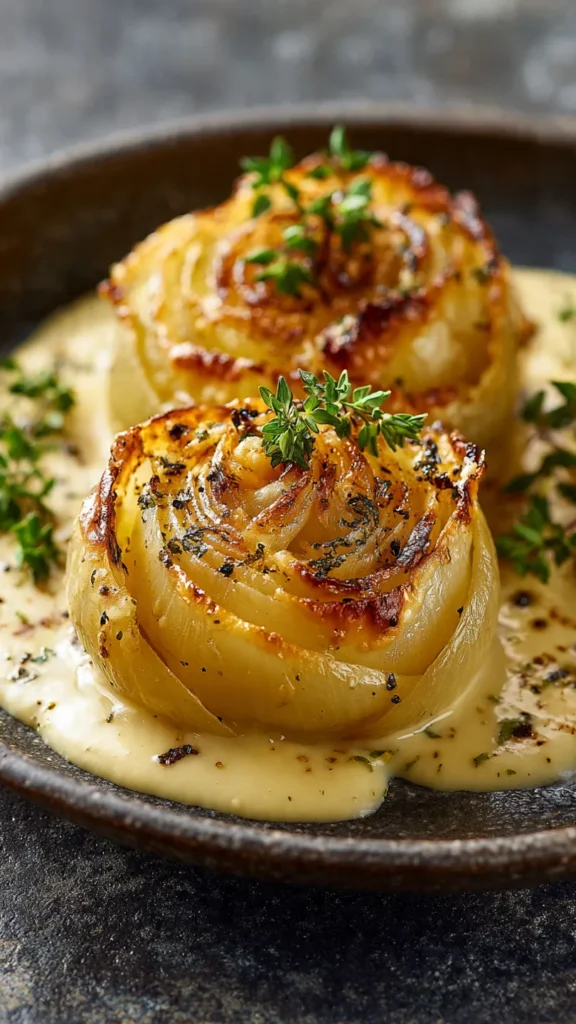
When it comes to transforming humble ingredients into restaurant-quality dishes, few recipes deliver quite like Asiago Roasted Onions. This sophisticated yet surprisingly simple side dish takes ordinary yellow onions and elevates them into a creamy, caramelized masterpiece that will have your family and guests reaching for seconds—and thirds. The magic lies in the perfect marriage of sweet roasted onions with the rich, nutty complexity of Asiago cheese, creating layers of flavor that complement everything from weeknight dinners to holiday feasts.
What makes this recipe truly special is its versatility and ease of preparation. In just 50 minutes from start to finish, you can create a side dish that looks and tastes like you spent hours in the kitchen. The onions undergo a beautiful transformation as they roast, developing deep caramelization and natural sweetness that pairs beautifully with the tangy cream sauce. Whether you’re serving it alongside prime rib, roasted chicken, grilled salmon, or simply enjoying it as a vegetarian main with crusty bread, this dish adapts beautifully to any occasion.
Why This Recipe Works
The brilliance of Asiago Roasted Onions lies in its simplicity and the science behind the cooking method. Roasting onions at high heat breaks down their sharp sulfuric compounds while concentrating their natural sugars through caramelization. This process creates that addictive sweet-savory flavor that makes roasted onions so irresistible. The addition of heavy cream creates a luxurious sauce that coats each onion slice, while the Dijon mustard adds a subtle tang that cuts through the richness and prevents the dish from feeling too heavy.
Asiago cheese brings its own magic to this recipe. This Italian cow’s milk cheese offers a nutty, slightly sharp flavor that intensifies as it melts, creating pockets of gooey goodness throughout the dish. Unlike milder cheeses that might get lost in the mix, Asiago holds its own, providing both flavor and texture that complement rather than overpower the sweet roasted onions.
Ingredients You’ll Need
- 2 pounds yellow onions (about 4 medium or 2 large), peeled and sliced into 1/4 inch to 1/2 inch rounds
- 3 tablespoons olive oil
- 1/2 teaspoon fresh thyme, finely chopped
- Salt and freshly ground black pepper to taste
- 1 cup heavy cream
- 2 teaspoons Dijon mustard
- 1/2 cup Asiago cheese, freshly grated (divided)
Step-by-Step Instructions
Preparing the Onions
Start by preheating your oven to 400°F (200°C). This temperature is ideal for achieving caramelization without burning. While the oven heats, prepare your onions by peeling away the papery outer layers and removing both ends. Slice them crosswise into uniform rounds between 1/4 and 1/2 inch thick. Consistency in thickness is key here—it ensures even cooking and prevents some pieces from burning while others remain undercooked.
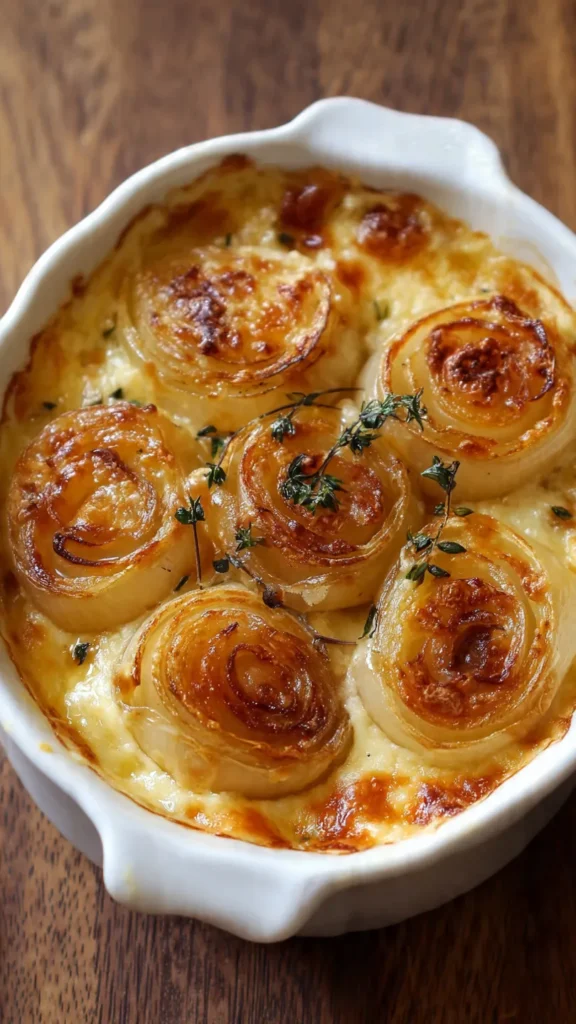
Grease a 9×13 inch baking dish or a similar-sized oven-safe dish with butter or cooking spray. Arrange the onion slices in the dish, slightly overlapping if necessary but trying to maintain mostly a single layer. This arrangement allows maximum surface area for caramelization. Drizzle the olive oil generously over the onions, then use your hands or a brush to ensure each slice gets coated. The oil is essential for developing that golden-brown exterior and preventing the onions from drying out.
Sprinkle the chopped thyme evenly over the onions, followed by a generous pinch of salt and several grinds of fresh black pepper. These seasonings penetrate the onions as they roast, building flavor from the inside out. Place the dish in your preheated oven and roast for 20 minutes. During this time, the onions will soften significantly and begin developing their characteristic sweetness.
Creating the Cream Sauce
While the onions work their magic in the oven, prepare the luxurious cream sauce that will tie everything together. Pour the heavy cream into a small saucepan and place it over medium heat. Watch it carefully and stir frequently with a wooden spoon or whisk. You want the cream to heat through and thicken slightly, but avoid letting it come to a full boil, which could cause it to break or curdle.
As the cream warms and begins to steam, add the Dijon mustard and stir until fully incorporated. The mustard not only adds flavor complexity but also acts as an emulsifier, helping create a smooth, cohesive sauce. Next, add half of your grated Asiago cheese (about 1/4 cup), reserving the rest for topping. Stir continuously as the cheese melts into the cream, creating a velvety sauce with a beautiful pale yellow hue. Once the cheese has completely melted and the sauce is smooth, remove it from heat and set aside.
Final Assembly and Baking
When your timer goes off and the onions have roasted for 20 minutes, carefully remove the baking dish from the oven. The onions should be tender when pierced with a fork and showing signs of golden-brown caramelization around the edges. They’ll have reduced in volume and developed an incredible aroma that fills your kitchen.
Pour the prepared cream sauce evenly over the roasted onions, using a spoon to help distribute it into all the corners and crevices of the dish. The sauce should pool around the onions, creating a rich base that will bubble and thicken as it continues cooking. Sprinkle the remaining grated Asiago cheese over the top, creating an even layer that will melt and brown beautifully.
Cover the dish tightly with aluminum foil. This step is crucial—it traps steam inside, which helps the onions finish cooking while keeping them moist and ensuring the cheese melts evenly. Return the covered dish to the oven and bake for an additional 20 minutes. You’ll know it’s ready when you can see the sauce bubbling enthusiastically around the edges and the cheese has melted into golden pools.
For an extra touch of color and texture, remove the foil during the last 5 minutes of baking to allow the cheese to brown slightly under the broiler. Keep a close eye on it during this time to prevent burning.
Pro Tips and Variations
The key to perfect Asiago Roasted Onions lies in a few important details. First, don’t rush the slicing process—uniform thickness ensures even cooking. Second, resist the urge to stir the onions during roasting. Letting them sit undisturbed allows proper caramelization to develop on the bottom surfaces.

If you can’t find Asiago cheese, excellent substitutes include aged Gruyère, which offers similar nuttiness, or Parmigiano-Reggiano for a sharper, saltier profile. Fontina also works beautifully, providing a creamier, milder alternative. For a budget-friendly option, a good quality sharp white cheddar can stand in admirably.
Consider these delicious variations: add crispy bacon bits between layers for a smoky element, incorporate fresh garlic cloves tucked between onion slices, or finish with a sprinkle of fresh parsley or chives for brightness and color contrast.
Serving Suggestions
Asiago Roasted Onions pair beautifully with robust main courses. Serve alongside grilled steaks, roasted pork tenderloin, herb-crusted lamb chops, or pan-seared chicken breasts. The dish also complements roasted root vegetables and makes an excellent addition to holiday tables, where it can hold its own among more traditional sides.
For a vegetarian main course, serve these onions over creamy polenta, alongside crusty bread for dipping in the sauce, or spooned over baked potatoes. Leftovers (if you have any) can be stirred into scrambled eggs, used as a pizza topping, or tucked into grilled cheese sandwiches for an elevated lunch.
Storage and Reheating
Store leftover Asiago Roasted Onions in an airtight container in the refrigerator for up to 3 days. Reheat gently in a covered dish at 325°F until warmed through, or microwave individual portions. The flavors actually deepen and meld overnight, making leftovers especially delicious.
This recipe proves that extraordinary dishes don’t require complicated techniques or exotic ingredients. With just onions, cream, cheese, and time, you can create a side dish that tastes like pure comfort food luxury. The combination of sweet caramelized onions and rich, cheesy sauce delivers satisfaction in every bite, making this recipe one you’ll return to again and again.