The Best Greek Moussaka Recipe (Layers of Mediterranean Heaven!)

The first time I tasted real Greek Moussaka in a family taverna overlooking the Aegean Sea, I was completely unprepared for the layers of flavor that would unfold with each forkful. The crispy golden top gave way to velvety béchamel, then tender eggplant that had soaked up all the rich, aromatic meat sauce underneath. What surprised me most was the unexpected warmth of cinnamon threading through the savory layers—a signature Greek touch that transforms this dish from a simple casserole into something truly magical.
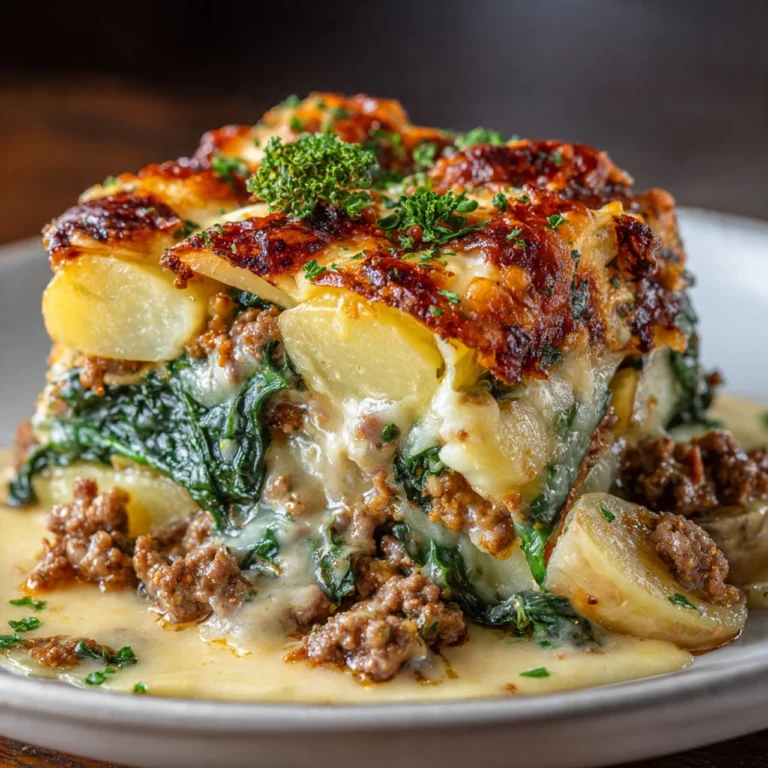
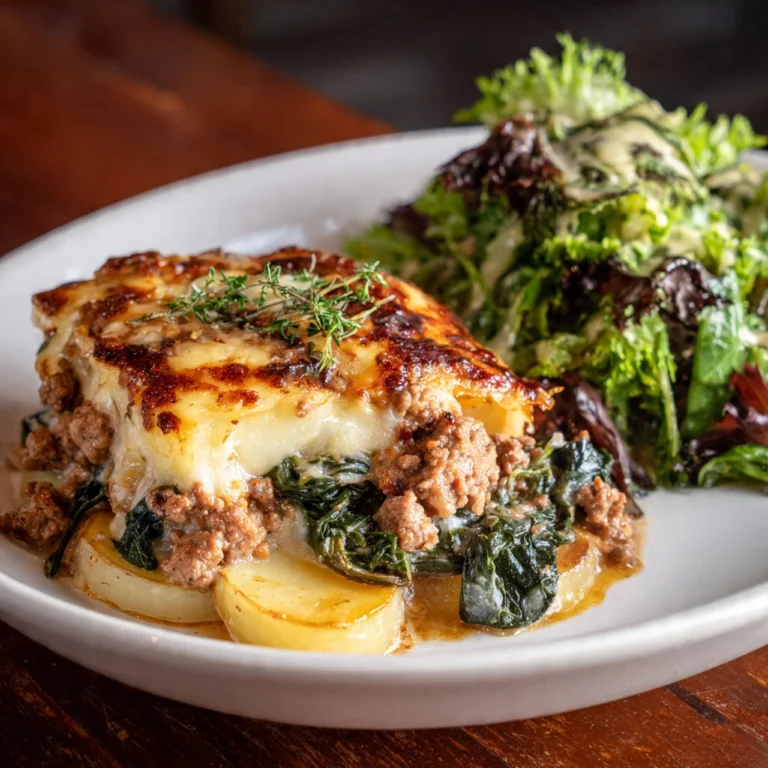
Moussaka is Greece’s answer to comfort food, traditionally served at Sunday family gatherings and special celebrations throughout the Mediterranean. While it might look intimidating with its multiple components, this recipe breaks down each layer into manageable steps that anyone can master. You’ll get restaurant-quality results with perfectly seasoned meat sauce, silky-smooth béchamel, and eggplant that melts in your mouth—all baked together into golden, bubbling perfection.
Table of Contents
Prep Time: 45 min | Cook Time: 1 hour 15 min | Total: 2 hours
Yield: 8-10 servings | Difficulty: Medium
Quick Stats Box:
- Cuisine: Greek/Mediterranean
- Course: Main Dish
- Diet: Can be made gluten-free
- Best for: Family dinners, special occasions, Sunday meals
Why This Recipe Works
- Authentic Greek flavors — Cinnamon and nutmeg create that unmistakable warmth that defines traditional Moussaka
- Make-ahead friendly — All three components can be prepared a day in advance, making entertaining stress-free
- Perfectly balanced layers — The ratio of eggplant to meat to béchamel ensures every bite has all three textures
- Restaurant-quality béchamel — Egg yolks and cheese create an ultra-creamy sauce that won’t curdle
- Feeds a crowd beautifully — One pan serves 8-10 people, perfect for gatherings and potlucks
Ingredient Spotlight
Eggplant Quality Matters: Choose firm, glossy eggplants without soft spots. The salting step draws out bitterness and excess moisture, ensuring your Moussaka isn’t watery and the eggplant maintains its shape during baking.
Cinnamon’s Secret Role: This warm spice is non-negotiable in authentic Greek Moussaka. It adds depth and aromatic complexity to the meat sauce without making it taste sweet—just mysteriously delicious.
Wine for Depth: Red wine isn’t just for flavor; it deglazes the pan and adds acidity that balances the rich meat and creamy béchamel.
Ingredients
For the Eggplant Layer:
- 3 large eggplants (about 2.5 lbs), sliced lengthwise into ¼-inch thick slices
- 2 tablespoons salt (for drawing out moisture)
- ⅓ cup extra virgin olive oil (for brushing)
- 2 medium Yukon Gold potatoes, sliced ¼-inch thick (optional, traditional addition)
For the Meat Sauce:
- 2 tablespoons olive oil
- 1 large yellow onion, finely chopped
- 3 cloves garlic, minced
- 1.5 lbs ground beef or lamb (or combination, 80/20 blend)
- 1 teaspoon ground cinnamon
- ½ teaspoon ground nutmeg
- 1 tablespoon dried oregano
- ½ teaspoon black pepper
- ¾ teaspoon salt
- 2 tablespoons tomato paste
- ½ cup red wine
- 1 (14 oz) can crushed tomatoes
- 1 cup beef broth
- 1 teaspoon sugar
- 2 bay leaves
- ¼ cup fresh parsley, chopped
For the Béchamel Sauce:
- 4 tablespoons (½ stick) unsalted butter
- ⅔ cup all-purpose flour
- 4 cups whole milk, warmed
- ¼ teaspoon ground nutmeg
- 1 teaspoon salt
- ¼ teaspoon black pepper
- 2 large eggs, lightly beaten
- 1 cup grated Parmesan cheese (or Greek Kefalotyri)
- 2 egg yolks
Assembly:
- 4 tablespoons breadcrumbs (for sprinkling between layers)
- ¼ cup grated Parmesan cheese (for topping)
Ingredient Notes:
- Quality matters most: Use freshly grated nutmeg if possible—pre-ground loses its aromatic oils quickly
- Room temperature is key: Eggs and milk (warmed) prevent the béchamel from seizing or becoming lumpy
- Don’t skip: The sugar in the meat sauce balances acidity from tomatoes and is essential for authentic flavor
Essential Equipment
You’ll Need:
- Large baking sheet — for roasting eggplant (rimmed, 18×13 inches)
- 9×13-inch baking dish — deep enough for layering (at least 3 inches deep)
- Large skillet or Dutch oven — for meat sauce (12-inch)
- Medium saucepan — for béchamel (3-quart capacity)
- Whisk — essential for lump-free béchamel
Nice to Have:
- Mandoline slicer — makes perfectly uniform eggplant slices in seconds
- Kitchen scale — for precise flour measurements in béchamel
- Pastry brush — for oiling eggplant slices evenly
How to Make Greek Moussaka (Step-by-Step)
Step 1: Prepare the Eggplant
Slice eggplants lengthwise into ¼-inch thick pieces and arrange in a single layer on paper towels. Sprinkle both sides generously with salt and let sit for 30-60 minutes—you’ll see beads of moisture forming on the surface. Pat dry thoroughly with paper towels. Preheat your oven to 425°F (220°C). Brush both sides of eggplant slices lightly with olive oil and arrange on baking sheets. Roast for 20-25 minutes until golden and tender, flipping halfway through. The eggplant should be soft enough to bend easily but not mushy.
Pro tip: Don’t skip the salting step—it removes bitterness and prevents soggy Moussaka.
Step 2: Make the Meat Sauce
Heat 2 tablespoons olive oil in a large skillet over medium-high heat. Add chopped onion and sauté for 5-6 minutes until softened and translucent. Add minced garlic and cook for 30 seconds until fragrant. Add ground meat, breaking it up with a wooden spoon, and cook until browned (about 8-10 minutes). Drain excess fat if needed. Stir in cinnamon, nutmeg, oregano, salt, and pepper—let the spices toast for 30 seconds until aromatic. Add tomato paste and cook for 2 minutes, stirring constantly. Pour in red wine to deglaze the pan, scraping up any browned bits. Add crushed tomatoes, beef broth, sugar, and bay leaves. Reduce heat to low and simmer uncovered for 25-30 minutes until thickened and most liquid has evaporated. You’ll know it’s ready when you can drag a spoon through the sauce and it doesn’t immediately fill back in. Remove bay leaves and stir in fresh parsley.
Pro tip: The sauce should be thick enough to hold its shape—watery sauce will make your Moussaka soggy.

Step 3: Create the Béchamel Sauce
Warm milk in a separate pot or microwave until hot but not boiling (about 160°F). In a medium saucepan, melt butter over medium heat. Add flour all at once and whisk constantly for 2-3 minutes to create a roux—it should be smooth and light golden but not browned. Gradually add the warmed milk in a slow, steady stream while whisking continuously. The sauce will thicken as you go. Continue whisking and cooking for 8-10 minutes until the sauce coats the back of a spoon and you can draw a line through it that holds. Remove from heat. In a small bowl, lightly beat eggs and egg yolks together. Temper the eggs by adding a ladleful of hot béchamel to the eggs while whisking constantly, then pour the egg mixture back into the saucepan, whisking vigorously. Add salt, pepper, nutmeg, and grated Parmesan. Stir until cheese melts completely and the sauce is silky smooth.
Common mistake: Adding eggs directly to hot sauce will scramble them—always temper first.
Step 4: Assemble the Moussaka
Reduce oven temperature to 350°F (180°C). Lightly oil your 9×13-inch baking dish. If using potatoes, create a bottom layer with potato slices. Layer half of the roasted eggplant slices, overlapping slightly to cover the bottom completely. Sprinkle with 2 tablespoons breadcrumbs. Spread the entire meat sauce evenly over the eggplant layer. Add remaining eggplant slices on top, again overlapping to create a solid layer. Sprinkle with remaining breadcrumbs. Pour the béchamel sauce over the top, using a spatula to spread it evenly to the edges, creating a smooth, sealed surface. Sprinkle with additional Parmesan cheese for a golden crust.
Step 5: Bake to Golden Perfection
Bake uncovered for 50-60 minutes until the top is deeply golden brown and the béchamel has set completely. You should see the edges bubbling gently. For an extra-golden crust, broil for 2-3 minutes at the end, watching carefully to prevent burning. Remove from oven and let rest for at least 20-30 minutes before cutting—this crucial step allows the layers to set so slices hold their shape. The Moussaka will actually taste even better after resting for 30-45 minutes.
Test kitchen discovery: Resting isn’t optional—cutting too early results in a saucy mess instead of beautiful, defined layers.
Expert Tips & Tricks
Temperature Matters: All components should be warm (not hot) when assembling to prevent the béchamel from melting into the meat sauce. If you’ve made components ahead, gently reheat them before layering.
Don’t Rush the Béchamel: Whisking constantly while adding milk is essential for a lump-free sauce. If lumps form, use an immersion blender to smooth them out before adding eggs.
The Secret to Perfect Layers: Sprinkle breadcrumbs between layers to absorb excess moisture and create distinct separation between components. This prevents a mushy texture.
Common Mistake: Over-oiling the eggplant makes the dish greasy. Brush lightly or use a spray bottle for even, minimal coverage.
Wine Selection: Use a dry red wine you’d actually drink—cooking doesn’t hide poor quality. Cabernet Sauvignon or Merlot work beautifully.
Customization Ideas
Dietary Modifications:
- Gluten-Free: Replace regular flour in béchamel with rice flour or cornstarch (use slightly less, about ½ cup cornstarch). Use gluten-free breadcrumbs or crushed gluten-free crackers between layers.
- Vegetarian: Replace meat with cooked lentils and finely chopped mushrooms (1.5 cups brown lentils + 8 oz mushrooms). Add extra oregano and tomato paste for depth.
- Lighter Version: Use ground turkey instead of beef, 2% milk instead of whole, and reduce butter in béchamel to 3 tablespoons. Broil eggplant instead of pan-frying to use less oil.
- Dairy-Free Béchamel: Not traditional, but use plant-based butter and unsweetened oat or soy milk. Nutritional yeast can replace Parmesan for a cheesy flavor.
Flavor Variations:
- Lamb Lovers: Use 100% ground lamb for the most authentic, richly flavored version
- Egyptian Moussaka: Skip the béchamel entirely and serve with thick Greek yogurt on the side for a lighter, tangier version
- Extra Vegetables: Add a layer of sautéed zucchini slices or roasted bell peppers between the eggplant layers
- Spice It Up: Add ¼ teaspoon cayenne pepper or 1 teaspoon hot paprika to the meat sauce for a gentle kick
- Herb Garden: Replace dried oregano with 2 tablespoons fresh oregano and add fresh thyme to the meat sauce
Serving Styles:
- Traditional: Serve family-style from the baking dish with a simple Greek salad and crusty bread
- Modern Plating: Cut into precise squares and plate individually, garnished with fresh parsley and a drizzle of good olive oil
- Party-Ready: Make in individual ramekins or a muffin tin for personal portions—reduce baking time to 25-30 minutes

Storage & Meal Prep
Make Ahead:
- Meat sauce: Can be made up to 3 days ahead and refrigerated in an airtight container
- Roasted eggplant: Prepare up to 2 days ahead, layer between parchment paper, and refrigerate
- Béchamel: Best made fresh, but can be made 1 day ahead—press plastic wrap directly on surface to prevent skin formation, refrigerate, and gently reheat before using
- Fully assembled: Assemble the entire dish (without baking) up to 24 hours ahead, cover tightly, refrigerate, and add 10-15 minutes to baking time
Storing:
- Counter: Once baked and cooled, Moussaka can sit at room temperature for up to 2 hours
- Fridge: Cover tightly and refrigerate for up to 4 days in an airtight container
- Freezer: Wrap individual portions or the whole dish tightly in plastic wrap, then aluminum foil. Freeze for up to 3 months
Reheating for Best Results:
From refrigerator: Cover with foil and bake at 350°F for 20-25 minutes until heated through. Remove foil for the last 5 minutes to re-crisp the top.
From frozen: Thaw overnight in refrigerator, then reheat as above. Or bake directly from frozen at 350°F for 45-60 minutes covered, then uncovered for 10 minutes.
Microwave method (for single portions): Heat on medium power for 2-3 minutes. For crisper texture, finish under the broiler for 1-2 minutes.
Pro tip: Moussaka actually tastes better the next day after flavors have melded—it’s the ultimate make-ahead dinner party dish.
What to Serve With Greek Moussaka
Perfect Pairings:
- Greek Salad (Horiatiki): Crisp cucumbers, tomatoes, red onion, olives, and feta with a simple lemon-oregano dressing cuts through the richness perfectly
- Crusty Bread: Warm pita or rustic sourdough for soaking up every last bit of sauce and béchamel
- Dry Red Wine: A medium-bodied Greek red like Agiorgitiko or Xinomavro complements the cinnamon-spiced meat beautifully
- Tzatziki: Cool, garlicky yogurt sauce provides refreshing contrast to the warm, hearty casserole
Complete the Meal:
- Appetizer: Start with homemade hummus, dolmades (stuffed grape leaves), or spanakopita triangles
- Side: Roasted lemon potatoes or braised green beans with tomatoes (Fasolakia)
- Dessert: Keep it light with fresh fruit, or go traditional with honey-drenched baklava and Greek coffee
Nutrition Facts (Per Serving – Based on 10 servings)
Calories: 485 | Protein: 28g | Carbs: 31g | Fat: 27g | Fiber: 6g | Sugar: 12g | Sodium: 680mg
Note: Calculated using standard USDA nutritional data. Values are approximate and will vary based on specific ingredients and portion sizes used.
Your Questions Answered
Can I make this without a broiler for the eggplant?
Yes! You can pan-fry the eggplant slices in batches with olive oil over medium-high heat (3-4 minutes per side) or roast in the oven at 425°F. Baking is healthier and hands-off, though pan-frying gives more color.
Why did my béchamel turn out lumpy?
Lumps form when flour isn’t fully incorporated into the butter, or when cold milk hits the hot roux too quickly. Always whisk constantly and add warm milk gradually. If lumps form, blend with an immersion blender before adding eggs.
What’s the best oil temperature for frying eggplant (if pan-frying)?
Heat oil to 350-375°F—test by dropping a small piece of eggplant in; it should sizzle immediately but not smoke. Too hot burns the outside while leaving the inside raw.
How do I keep the top crispy after storing?
The béchamel top will soften when refrigerated. Reheat uncovered in the oven or run under the broiler for 2-3 minutes to restore the golden crust.
Can I double the recipe?
Absolutely! Use two 9×13-inch baking dishes or one extra-large roasting pan. Keep baking time the same but check that the center is hot (internal temp 165°F) before removing from oven.
What if I don’t have red wine?
Substitute with additional beef broth plus 1 tablespoon red wine vinegar or balsamic vinegar for acidity. The flavor will be slightly less complex but still delicious.
Can I use lamb instead of beef?
Yes! Ground lamb is actually the more traditional choice in Greece. It has a richer, slightly gamey flavor that pairs beautifully with the warm spices. You can also use a 50/50 blend.
Recipe History & Cultural Context
Moussaka is arguably Greece’s most famous dish, though its exact origins spark friendly debate across the Mediterranean. While similar layered casseroles appear in Turkish and Middle Eastern cuisines, the Greek version with its signature béchamel topping was standardized in the 1920s by chef Nikolaos Tselementes, who studied French culinary techniques and applied them to traditional Greek ingredients. His innovation of adding creamy béchamel transformed Moussaka from rustic peasant fare into an elegant dish worthy of special occasions.
The word “moussaka” likely derives from the Arabic “musaqqa’a,” meaning “moistened” or “chilled,” referring to the way vegetables absorb the meat sauce. Traditional variations exist across Greece—some regions include potatoes, others use zucchini instead of eggplant, and island versions might incorporate local cheese. The aromatic warmth of cinnamon and nutmeg distinguishes Greek Moussaka from similar dishes elsewhere, reflecting the country’s historical spice trade routes.
Today, Moussaka remains a Sunday staple in Greek homes and a proud menu centerpiece at tavernas worldwide. It’s the dish Greek grandmothers make for homecomings, served at weddings and festivals, and the one recipe every Greek cook masters their own way—passed down through generations with small adjustments that make each family’s version unique.
Printable Recipe Card
Greek Moussaka
Layers of roasted eggplant, cinnamon-spiced meat sauce, and creamy béchamel baked to golden perfection
Ingredients:
Eggplant: 3 large eggplants (sliced ¼” thick), 2 tbsp salt, ⅓ cup olive oil
Meat Sauce: 2 tbsp olive oil, 1 large onion (chopped), 3 garlic cloves (minced), 1.5 lbs ground beef/lamb, 1 tsp cinnamon, ½ tsp nutmeg, 1 tbsp oregano, ½ tsp black pepper, ¾ tsp salt, 2 tbsp tomato paste, ½ cup red wine, 14 oz crushed tomatoes, 1 cup beef broth, 1 tsp sugar, 2 bay leaves, ¼ cup parsley
Béchamel: 4 tbsp butter, ⅔ cup flour, 4 cups warm milk, ¼ tsp nutmeg, 1 tsp salt, ¼ tsp pepper, 2 eggs + 2 yolks (beaten), 1 cup Parmesan
Assembly: 4 tbsp breadcrumbs, ¼ cup Parmesan
Instructions:
- Salt eggplant slices, let sit 30-60 min, pat dry. Brush with oil, roast at 425°F for 20-25 min until golden.
- Sauté onion until soft, add garlic briefly. Brown meat, drain fat. Add spices, toast 30 sec. Add tomato paste, cook 2 min. Deglaze with wine. Add tomatoes, broth, sugar, bay leaves. Simmer 25-30 min until thick. Remove bay leaves, stir in parsley.
- Melt butter, whisk in flour for 2-3 min. Gradually add warm milk while whisking. Cook 8-10 min until thick. Temper beaten eggs with hot sauce, then add back. Stir in salt, pepper, nutmeg, and cheese.
- In 9×13″ dish, layer: half eggplant, sprinkle 2 tbsp breadcrumbs, all meat sauce, remaining eggplant, remaining breadcrumbs, all béchamel. Top with Parmesan.
- Bake at 350°F for 50-60 min until golden. Rest 20-30 min before cutting.
Notes:
- Don’t skip salting eggplant—prevents bitterness and sogginess
- All components should be warm (not hot) when assembling
- Resting time is essential for clean slices
- Tastes even better the next day!