Creamy Italian Sausage Pasta: A Restaurant-Quality Dinner in One Skillet
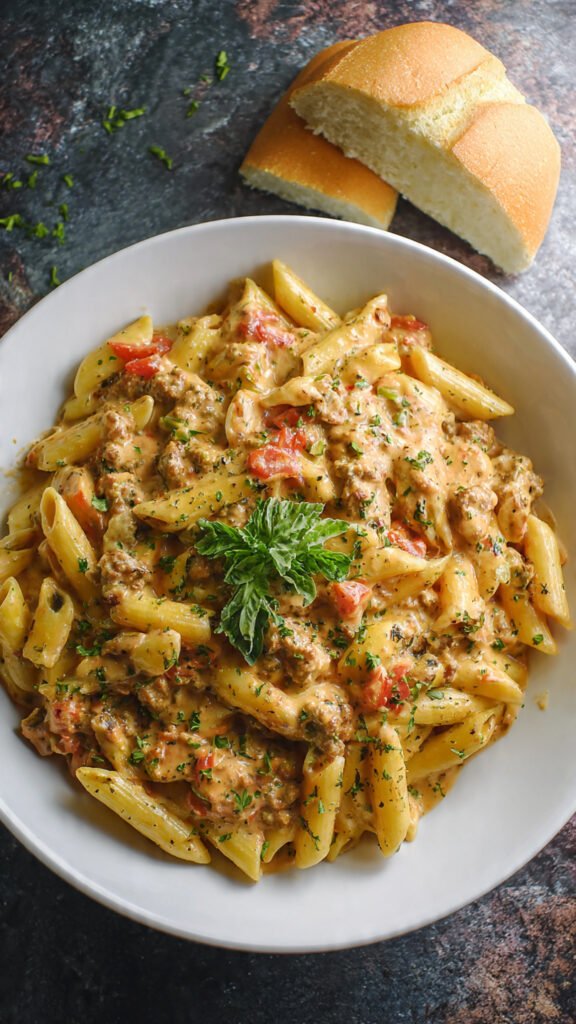
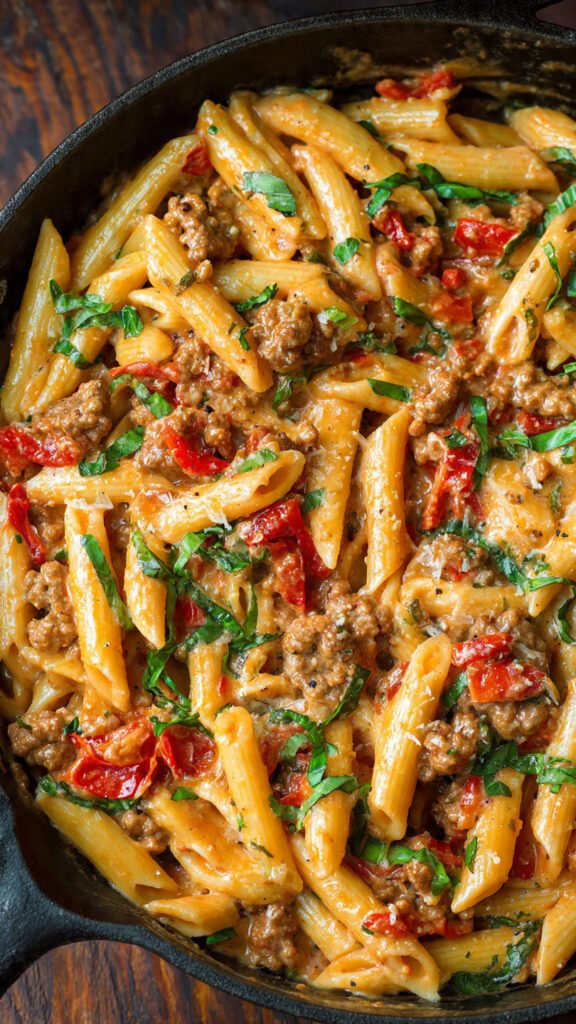
There’s something magical about a pasta dish that brings together bold Italian flavors with a luxuriously creamy sauce. This creamy Italian sausage pasta delivers exactly that—a comforting, restaurant-quality meal that comes together in a single skillet. Imagine tender rigatoni tubes perfectly coated in a silky parmesan cream sauce, studded with savory Italian sausage, vibrant spinach, and tangy sun-dried tomatoes. It’s the kind of dish that makes weeknight cooking feel special without requiring hours in the kitchen.
What makes this recipe truly shine is its simplicity paired with impressive results. You’ll start by browning flavorful Italian sausage with aromatic onions and garlic, building a foundation of savory depth. Then, you’ll create a velvety sauce using a classic roux technique, enriched with heavy cream and finished with generous amounts of freshly grated parmesan cheese. The sun-dried tomatoes add bursts of concentrated tomato sweetness, while fresh baby spinach wilts into the sauce, adding color and nutrition.
The beauty of this one-skillet approach means less cleanup and more time enjoying your meal. Whether you’re cooking for your family on a busy Tuesday or preparing an impressive dinner for guests, this creamy Italian sausage pasta strikes the perfect balance between effortless and elegant.
What You’ll Need
For the Pasta and Sausage:
- ¾ pound rigatoni pasta
- 1 tablespoon olive oil
- ½ pound mild Italian sausage
- ¾ cup yellow onion, finely diced
- 1 tablespoon fresh garlic, minced
- ¾ teaspoon Italian seasoning blend
- ½ teaspoon salt, plus extra for pasta water
- ¼ teaspoon freshly ground black pepper
- ¼ teaspoon crushed red pepper flakes
For the Cream Sauce:
- 2 tablespoons unsalted butter, at room temperature
- 2 tablespoons all-purpose flour
- 1 cup chicken broth
- 1¾ cups heavy cream
- ¾ cup julienned sun-dried tomatoes packed in herbed olive oil, drained
- 1½ cups freshly shredded parmesan cheese
- 3 cups lightly packed baby spinach
Optional Garnish:
- Fresh parsley, chopped
Step-by-Step Instructions
Preparing the Pasta
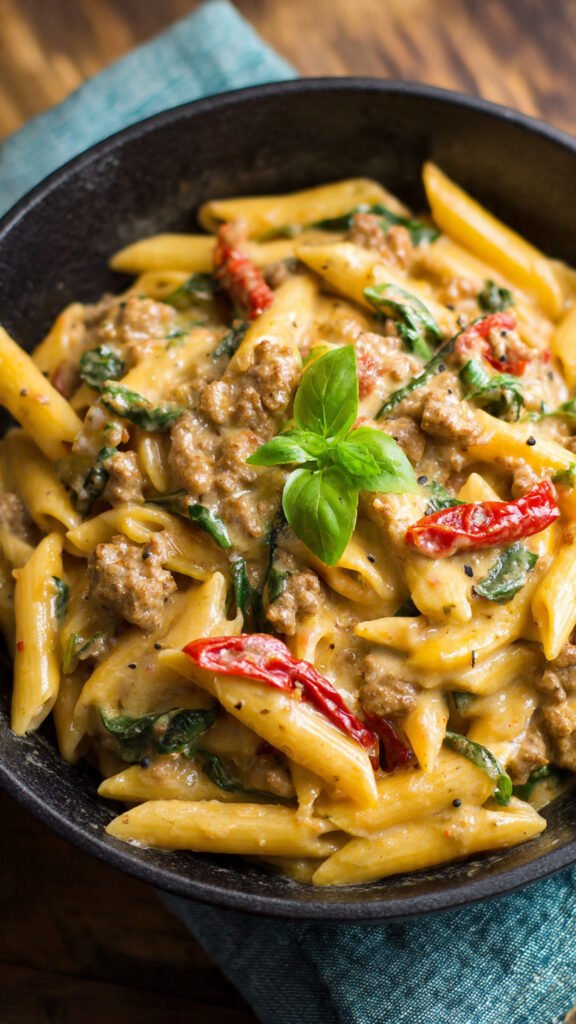
Begin by bringing a large pot of water to a rolling boil. Once boiling, add a generous amount of salt—the water should taste like the sea. This is your only opportunity to season the pasta itself from the inside out. Add the rigatoni to the boiling water and cook for 9-11 minutes, or according to the package directions, until the pasta reaches al dente texture. You want the pasta to have a slight firmness when you bite into it, as it will continue cooking slightly when combined with the hot sauce later.
Once cooked, drain the pasta thoroughly in a colander and set it aside. Don’t rinse the pasta—the starchy coating helps the sauce cling better. While your pasta is cooking, you can simultaneously work on preparing the sausage and sauce components, making this truly an efficient one-pot wonder.
Building Flavor with Sausage
Heat a large 12-inch skillet over medium-high heat. When the pan is hot, add the olive oil and let it shimmer for a moment. If you’re using link sausage, remove the casings before adding the meat to the pan. Break the sausage into bite-sized pieces as you add it to the skillet.
Add the finely diced yellow onion, minced garlic, Italian seasoning, salt, black pepper, and crushed red pepper flakes to the pan with the sausage. The key here is to let everything cook together, allowing the spices to bloom in the hot oil and the onions to soften and become translucent. Cook this mixture for 9-11 minutes, stirring occasionally to ensure even browning.
You’ll know the sausage is ready when it develops a beautiful golden-brown exterior and the onions become soft and fragrant. The kitchen will smell absolutely incredible at this point, with the aromatics of garlic, Italian herbs, and browned meat filling the air.
Transfer the cooked sausage mixture to a paper towel-lined plate. This step allows excess grease to drain away, ensuring your final dish isn’t overly oily. Set the sausage aside while you prepare the cream sauce. Before returning the sausage to the skillet later, discard the paper towel.
Creating the Silky Cream Sauce
Reduce the heat under your skillet to medium-low. This gentler temperature is crucial for the next steps—you’re about to create a roux, which requires careful attention to prevent burning. Add the unsalted butter to the still-warm skillet and let it melt completely, swirling to coat the bottom of the pan.
Once the butter has melted and begun to foam slightly, sprinkle the all-purpose flour over it. Immediately begin whisking to combine the flour and butter into a smooth paste. Continue whisking for about a minute, cooking the flour until it turns a light golden brown. This cooking step removes the raw flour taste and creates a nutty, toasted flavor that adds depth to your sauce.
Now comes the critical part: slowly pour in the chicken broth while whisking constantly. Add it gradually to prevent lumps from forming. Keep whisking until the mixture is completely smooth and no traces of flour remain. The sauce will begin to thicken as the heat activates the flour’s starches.
Next, whisk in the heavy cream and add the drained sun-dried tomatoes. Increase the heat slightly to bring the mixture to a gentle, low boil. Once it reaches a boil, immediately reduce the heat to low and let the sauce simmer. This simmering process is essential—over the next 5-7 minutes, the sauce will reduce by about half its volume and thicken to a luxurious consistency that coats the back of a spoon.
Throughout the simmering process, whisk the sauce frequently. This prevents the dairy from scorching on the bottom of the pan and ensures a silky-smooth texture. You’ll notice the sauce transforming from a thin liquid into a rich, velvety cream that promises to cling beautifully to each piece of pasta.
Finishing Touches
When your sauce has reached the perfect consistency, it’s time to add the cheese. Remove the skillet from direct heat and slowly stir in the freshly shredded parmesan cheese. Add it gradually, stirring constantly to help it melt evenly into the sauce. Fresh parmesan melts more smoothly than pre-shredded varieties, which often contain anti-caking agents that can make the sauce grainy.
Once the cheese is fully incorporated and the sauce is gloriously creamy, add the baby spinach. Stir gently until the spinach leaves wilt completely—this should only take a minute or two. The residual heat is perfect for wilting the spinach without overcooking it.
Now, return the reserved sausage mixture to the skillet along with the drained rigatoni pasta. Using tongs or a large spoon, toss everything together until each piece of pasta is evenly coated with the creamy sauce and the ingredients are well distributed throughout.
Remove the skillet from the heat and garnish with a sprinkle of freshly chopped parsley for a pop of color and freshness. Serve immediately while the sauce is at its creamiest and most luscious.
Storage and Make-Ahead Tips
Storing Leftovers: Transfer any remaining pasta to an airtight container and refrigerate for up to three days. The sauce may thicken as it cools, which is completely normal.
Reheating: Warm leftovers gently in a skillet over medium-low heat. Add a few tablespoons of chicken broth or cream to loosen the sauce and restore its creamy consistency. Stir frequently to heat evenly.
Freezing: Unfortunately, this dish doesn’t freeze well because cream-based sauces tend to separate and become grainy when thawed. It’s best enjoyed fresh or within a few days of preparation.
Make-Ahead Option: While this pasta is best served immediately after preparation, you can make it a few hours in advance if needed. Keep the sauce slightly looser than usual by adding extra broth, and reheat gently just before serving, stirring in additional broth as needed.
Expert Tips for Perfect Results
Choose uncooked, fresh Italian sausage rather than smoked or pre-cooked varieties for the best flavor and texture. If using sausage links, remember to remove the casings before cooking—simply slice along the length of each link and peel away the casing.
Temperature control is crucial when working with cream sauces. Once you’ve added the heavy cream, keep the heat relatively low to prevent the dairy from separating or curdling. A gentle simmer is all you need.
Constant stirring while the sauce reduces isn’t just busywork—it’s essential for achieving that smooth, lump-free texture. Set a timer and give the sauce a good whisk every minute or so.
Add the spinach at the very end of cooking. Baby spinach wilts quickly and can become slimy and overcooked if added too early. The residual heat from the sauce is sufficient to wilt it perfectly.
For the richest flavor, use freshly grated parmesan cheese rather than the pre-shredded kind. Fresh cheese melts more smoothly and has a more pronounced, complex flavor that really elevates the dish.